In November 1708, the merchant ship Anna Maria became stuck in sea ice in the Stockholm archipelago. Five of its crew were assigned to remain on board as caretakers until the spring thaw. This plan worked well enough for a few months, but one night in February the crew went drinking on shore and left a fire unattended in the ship’s kitchen! The Anna Maria burned and sank. We can tell you first-hand that its cargo of wooden planks is still intact in the bow, and the fire-scorched hull can be seen clearly in the stern.
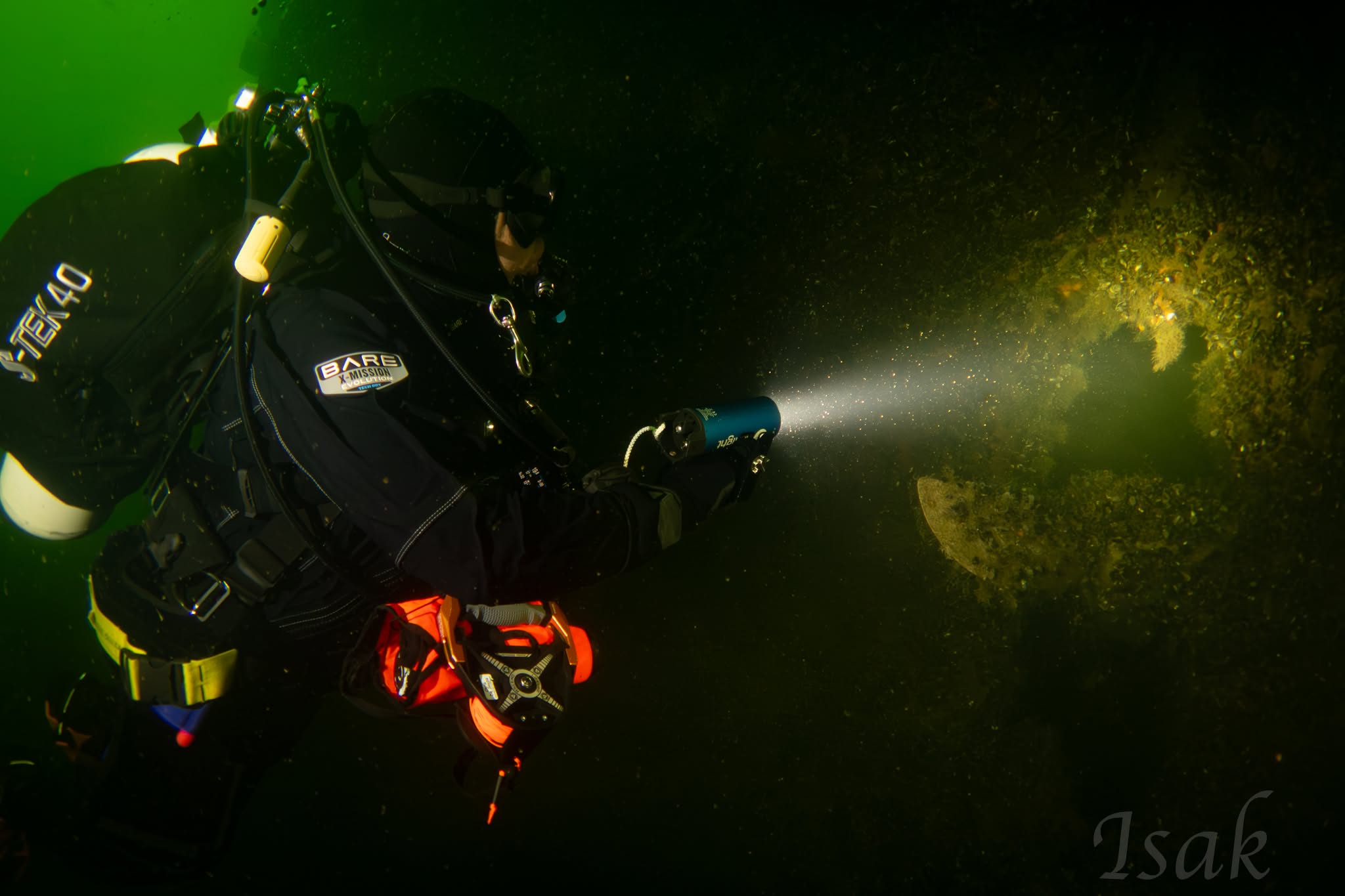
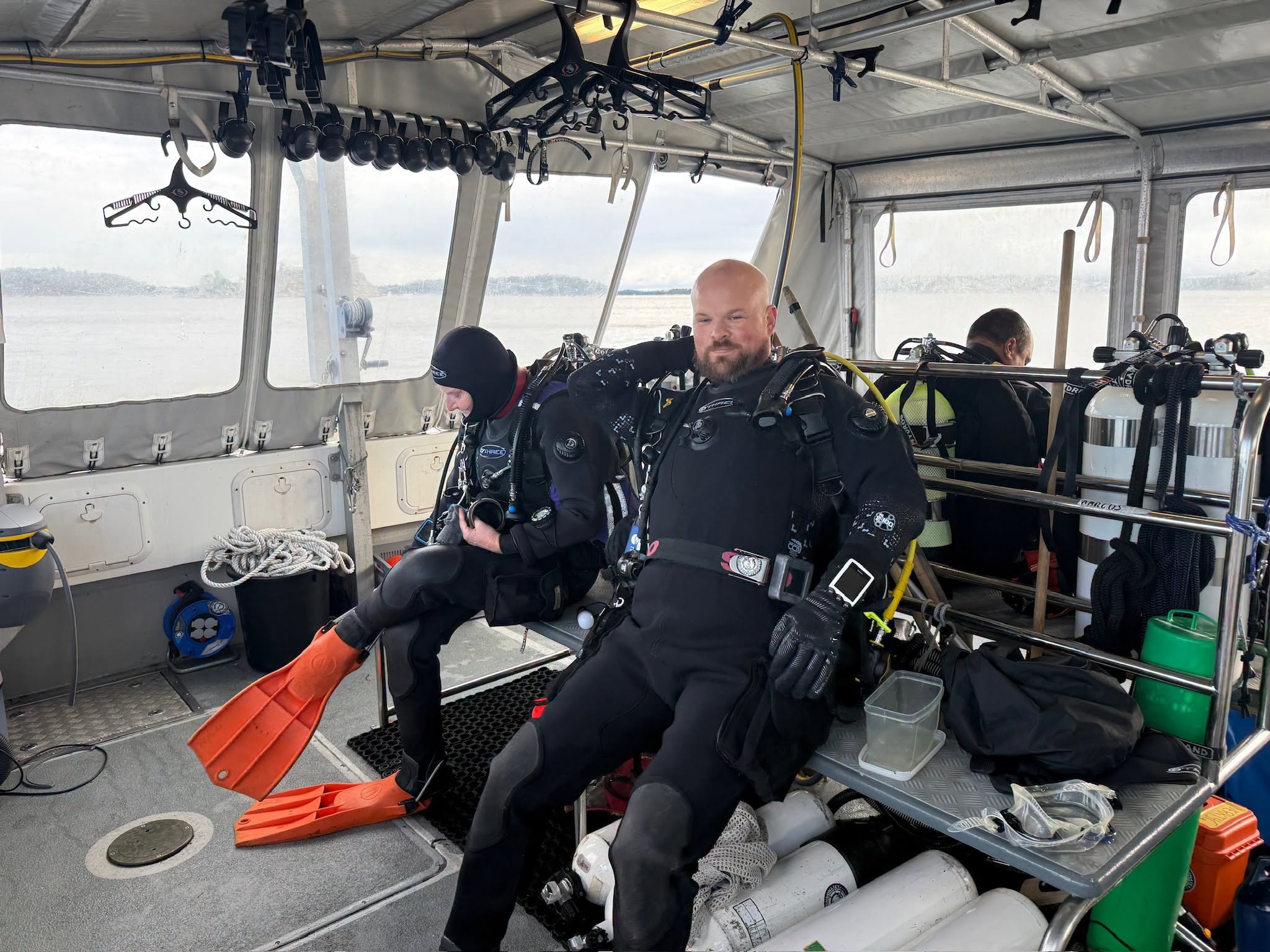
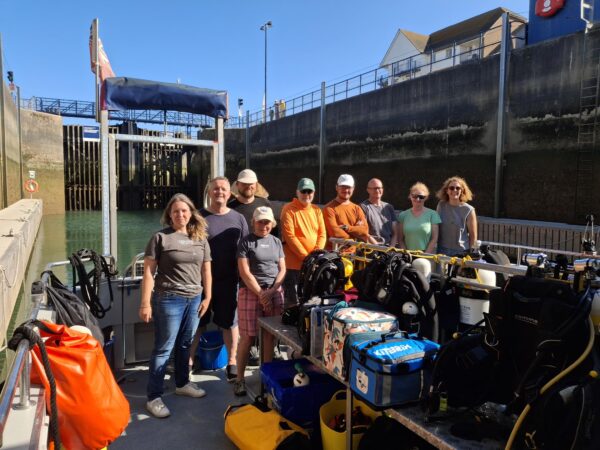
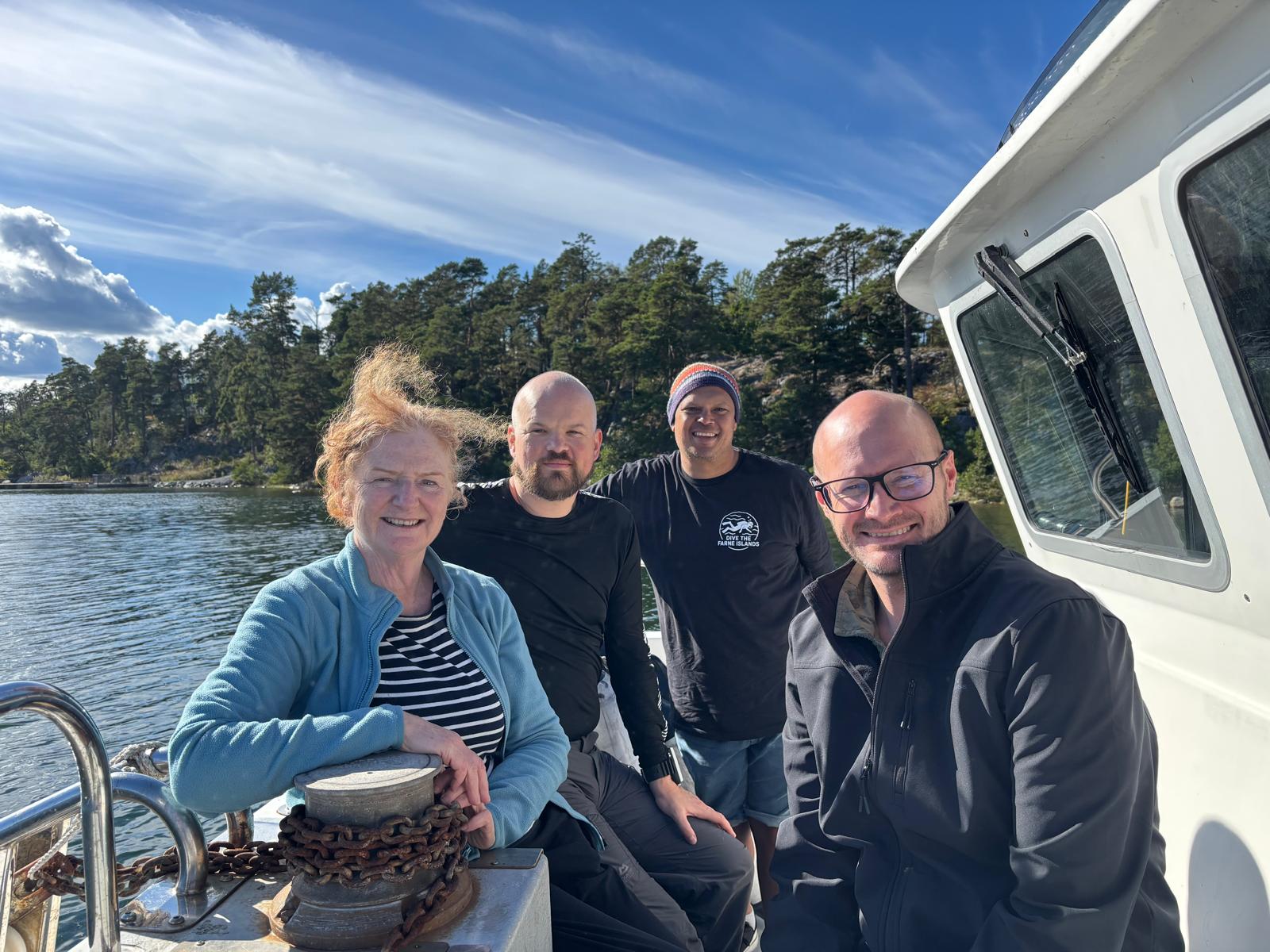
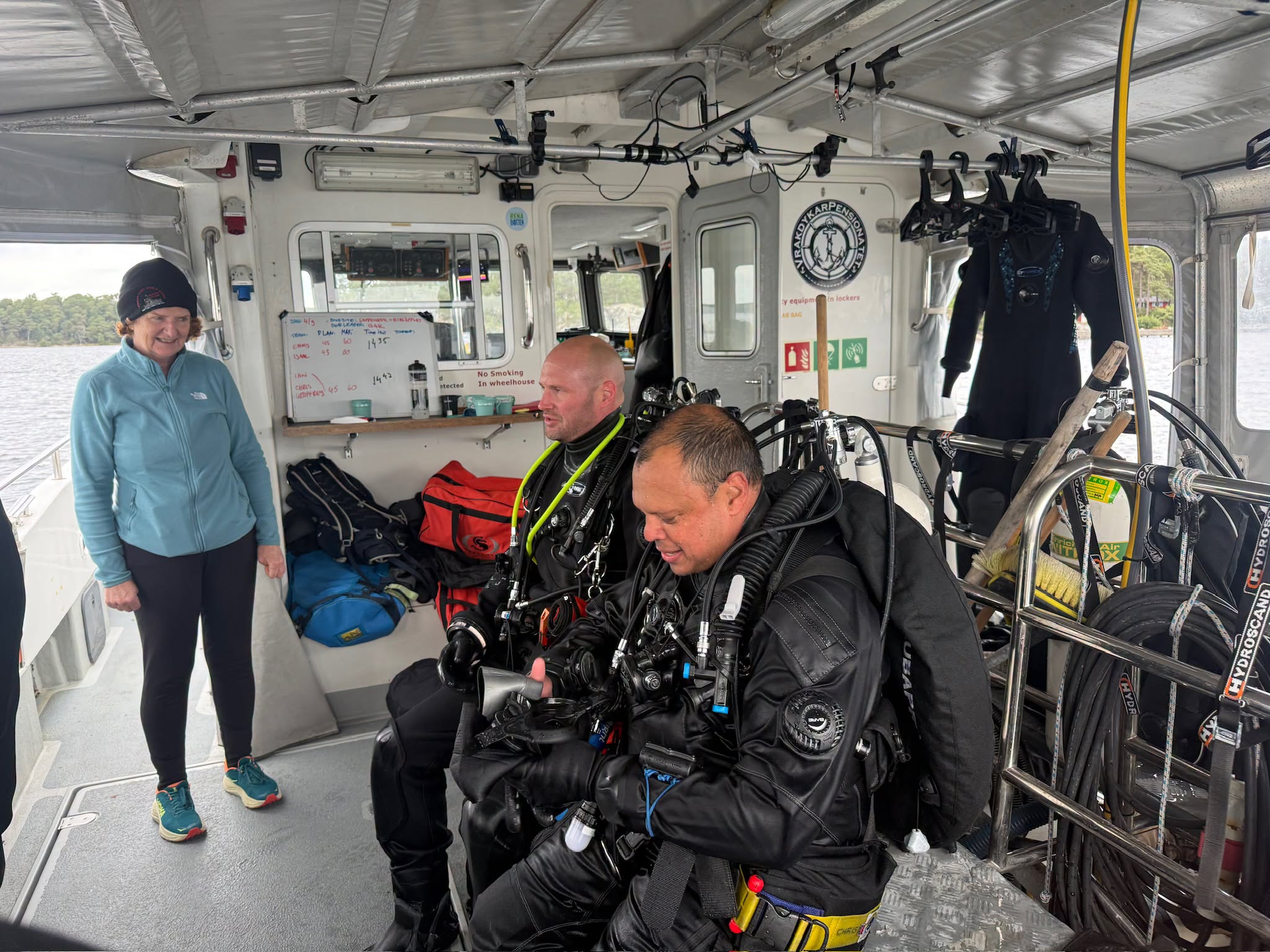
This September five of us — Chris, Geoff, Ian, Sally and Teresa — travelled to Stockholm to go and have a look at the wreck for ourselves. Over a long weekend we dived five wooden wrecks — Anna Maria, Gröne Jägaren, Riksäpplet, and two unnamed wrecks at the islands of Pilkobben and Jutholm — and one steel shipwreck, the Sappemeer. Our hosts at Vrakdykarpensionatet (Swedish for The Wreck Diving Lodge) in Dalarö were surely the friendliest, most generous and most welcoming dive centre crew we’ve ever seen or heard of. We can’t recommend them highly enough.
Despite its name, the Baltic is more like a lake than a sea. There’s so little salt that the water tastes fresh; local divers see no need to rinse their kit after diving, and most of us kept the same diving weights we’d use in fresh water. There’s also very little mixing between water layers. These features have protected wooden wrecks against shipworm for hundreds of years, and visitors can dive on 17th- and 18th-century wooden ships which in the North Sea or English Channel would have rotted away to nothing within a decade. Plus, the sheltered spaces between the islands of the Stockholm archipelago make for blissfully calm waters which English Channel divers can only dream of.
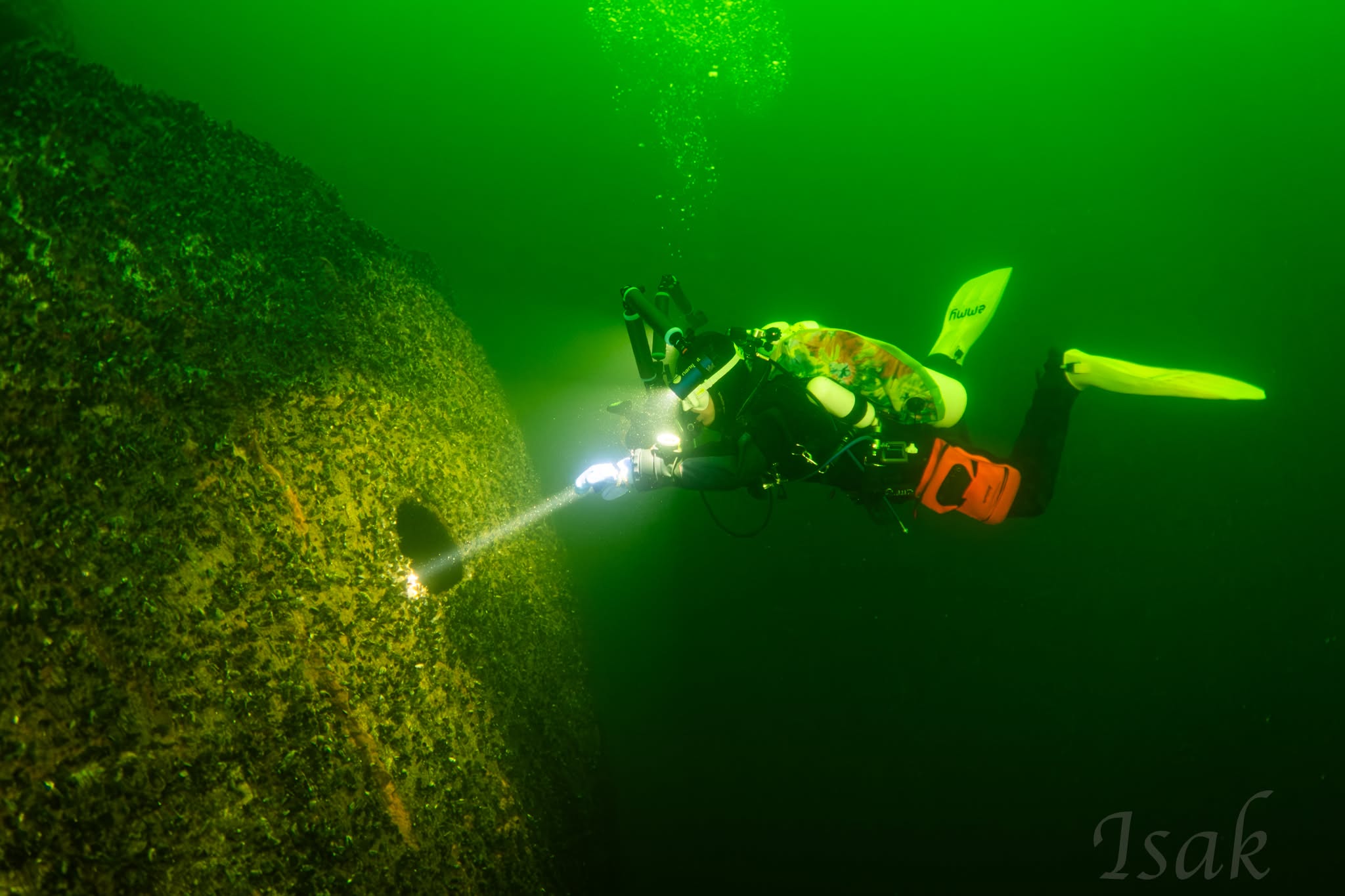
Algae in the Baltic’s surface layers filter out enough light to make deeper dives almost night-black, despite the impressive clarity of the deep water. Strong lighting is recommended! At the surface the water was a happy 18°C, losing about four degrees with every ten metres of depth. Our thirty-metre dive on the Gröne Jägaren (which sank in 1676 when an accident ignited its gunpowder magazine) might have been as cold as the inside of a fridge, but does your fridge contain an intact 17th-century cannon? Shallower dives on the Riksäpplet, the Anna Maria and the two unnamed wrecks showed us all kinds of smaller historical artefacts, from wine bottles and smoking pipes to three-hundred-year-old ropes, cannon parts and ammunition. The final day of the tour gave us one last wreck, but this time above ground: the Vasa, a nearly 400-year-old warship now located in the centre of Stockholm, forming the centerpiece of the city’s most visited museum.
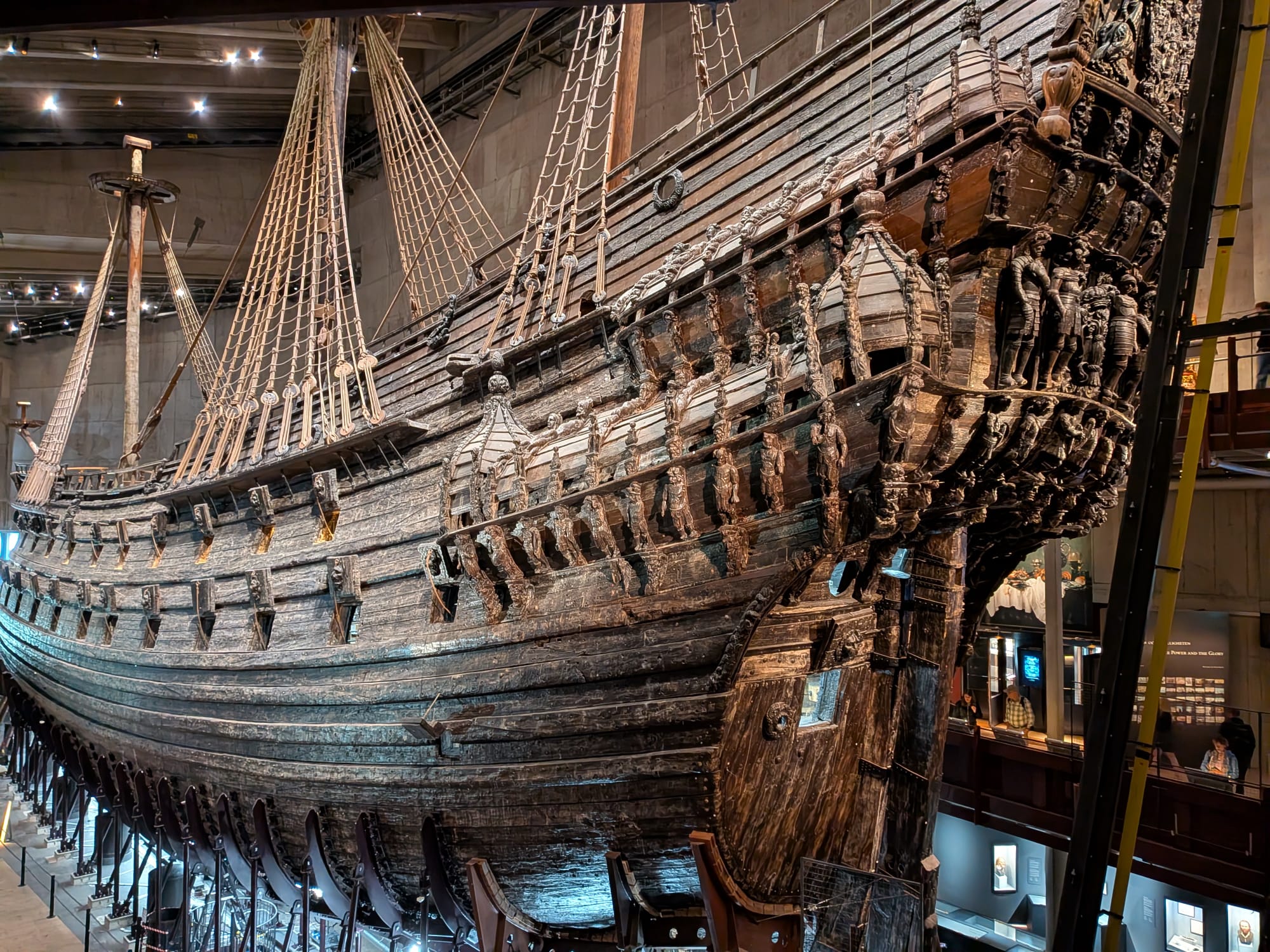
I could say that Stockholm was so nice to visit that some of us ended up staying almost a whole extra week — but that wouldn’t quite be accurate! Air traffic control problems on the Tuesday night held three of us up in Stockholm for rather longer than we’d intended. Thankfully there’s no shortage of things to see and do there, of which the Vasa Museum was just one of several favourites.
~ Ian